VMware Cloud Foundation (VCF) is VMware’s flagship hybrid cloud platform that brings together compute, storage, networking, and security into a unified software-defined data center (SDDC) stack. It allows businesses to implement and maintain a uniform infrastructure and operations across both private and public cloud environments.
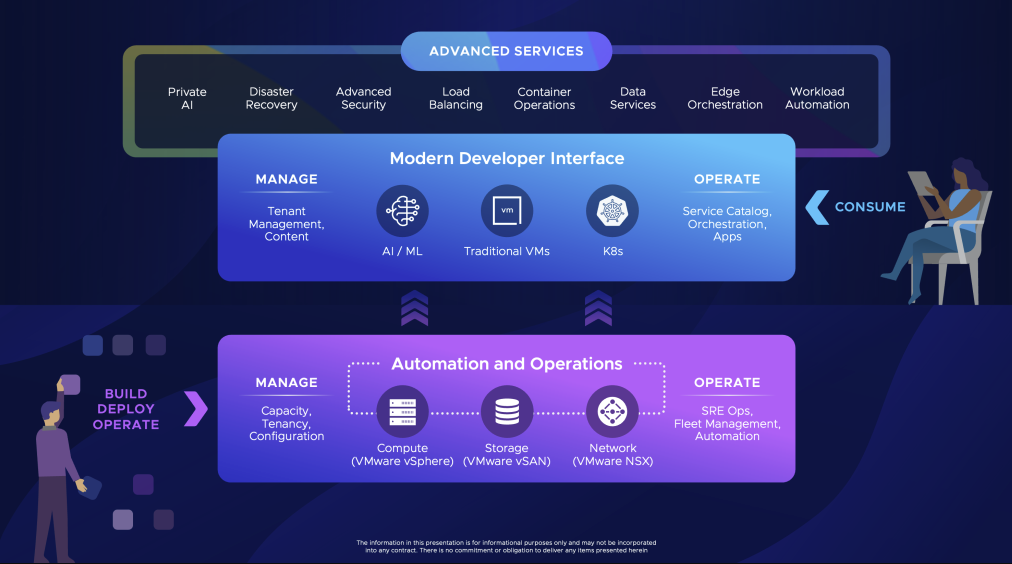
VCF is designed to simplify the setup and operation of a full-stack cloud infrastructure by integrating core VMware components like vSphere, vSAN, NSX, and VMware Aria Suite (formerly vRealize) into a single automated platform.
VMware Cloud Foundation (VCF)
Key Features of VMware Cloud Foundation:
Integrated SDDC stack: Combines virtualization, storage, and networking in a fully integrated platform.
Automated lifecycle management: Streamlines updates, patching, and configuration management across the entire stack.
Hybrid and multi-cloud readiness: Enables consistent operations across on-premises data centers and public cloud services like VMware Cloud on AWS, Azure VMware Solution, and Google Cloud VMware Engine.
Enhanced security: Built-in micro-segmentation, encryption, and compliance capabilities.
Modern app support: Supports Kubernetes and container workloads with integrated Tanzu for VMware.
Top Use Cases for VMware Cloud Foundation
1. Data Center Modernization:
VCF helps businesses transition from traditional infrastructure to a fully virtualized, software-defined model. As a result, operational efficiency, scalability, and automation are improved.
2. Hybrid Cloud Deployment:
Organizations can extend their private cloud infrastructure to the public cloud using the same tools, policies, and management practices—minimizing friction and complexity.
3. Disaster Recovery and Business Continuity:
VCF supports seamless integration with VMware Site Recovery Manager and public cloud DR solutions, ensuring high availability and quick recovery in case of disruptions.
4. Virtual Desktop Infrastructure (VDI):
VCF provides a robust foundation for deploying and managing virtual desktops with VMware Horizon, ensuring secure, scalable, and performant end-user computing.
5. Cloud-Native Application Hosting:
With integrated support for VMware Tanzu, VCF allows organizations to run Kubernetes clusters alongside traditional workloads—ideal for businesses adopting microservices and DevOps practices.
6. Compliance-Driven Environments:
VCF’s built-in security features, coupled with consistent policy enforcement, make it suitable for regulated industries such as finance, healthcare, and government.
Conclusion:
VMware Cloud Foundation delivers a scalable, secure, and automated infrastructure platform that empowers businesses to unify their cloud environments. Whether it’s for modernizing data centers, supporting hybrid deployments, or enabling agile development practices, VCF provides a reliable and future-ready foundation for digital transformation.